Blog — 03 August 2026
SIR ROGER
CASEMENT
Humanitarian, revolutionary, martyr
This week marks the 110th anniversary of the execution of Sir Roger Casement (1864–1916), carried out at Pentonville Prison on 3 August 1916.
He remains one of the most complex and compelling figures in Irish history: a humanitarian, revolutionary, diplomat, and ultimately a martyr of the Easter Rising. Born in Dublin and raised in County Antrim, Casement first gained global recognition for his groundbreaking humanitarian work. As a British consular official, he exposed atrocities in the Congo Free State, documenting the brutal exploitation of African labourers under King Leopold II. His 1904 Congo Report shocked the world and earned him a knighthood. He later repeated this work in the Amazon, uncovering similar abuses in the Putumayo region of Peru. These investigations established Casement as one of the most important human rights advocates of his era.
By the early 1910s, Casement's political convictions had shifted decisively toward Irish nationalism. He became a leading figure in the Irish independence movement, and when WW1 broke out, he travelled to Germany seeking support for an armed uprising in Ireland. His efforts culminated in the ill-fated plan to land German arms at Tralee in April 1916. Casement was arrested shortly afterwards and charged with high treason.
He was the last participant of the Easter Rising to be executed. In the days before his death, the British government circulated extracts from the now-infamous Black Diaries — three journals containing explicit accounts of Casement's homosexuality — aimed at undermining public sympathy and diplomatic appeals for clemency. The Black Diaries occupy one of the most contested and emotionally charged spaces in Casement's story. These three journals — dated 1903, 1910, and 1911 — contain explicit descriptions of homosexual encounters alongside routine notes on travel, expenses, and daily observations. Their sudden emergence in the days before Casement's execution was not incidental. The British government, facing intense diplomatic pressure from the United States and prominent humanitarian figures, recognised that Casement's moral authority was a major obstacle to carrying out the death sentence. By selectively circulating extracts to influential individuals, they aimed to recast him not as a principled humanitarian but as a man whose private life could be used to discredit his public cause.
The timing was extraordinary. The diaries had not been mentioned during Casement's trial, nor were they introduced as evidence. Instead, they were quietly shown to politicians, journalists, church leaders, and American diplomats — always privately, never publicly. This strategy allowed the government to shape opinion without subjecting the documents to scrutiny. Many who had been advocating for clemency withdrew their support almost immediately, convinced or unsettled by what they had been shown. In an era when homosexuality was criminalised and socially reviled, the mere suggestion of such behaviour was enough to fracture sympathy.
Their authenticity has remained a point of fierce debate for more than a century. Handwriting experts have repeatedly affirmed that the diaries match Casement's hand, yet critics argue that the British government had both motive and opportunity to produce forgeries. Some point to inconsistencies in style, the unusually graphic nature of certain passages, and the opaque chain of custody. Others state the diaries were kept under strict secrecy for decades, accessible only to select officials, which further fuelled suspicion. Even today, scholars remain divided — not necessarily on whether Casement was gay, but on whether these specific documents were manipulated or weaponised.
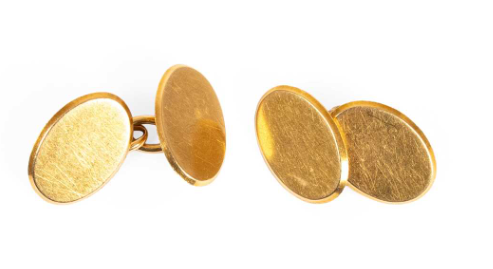
Casement's memory lives on in many forms and indeed I have two connections myself. As a young schoolboy, my dad took me for a spin in the car one Sunday. We had John Bates with us. Off we set for Mulroy Bay in Antrim where John played the Last Post at a ceremony to commemorate the 50th anniversary of Casement's death. A more tenuous link is through my friend, Neil. His sister-in-law inherited a pair of cufflinks said to have belonged to Roger Casement. Her grandfather had been gifted them by Casement while a warden in Pentonville.
A small but evocative reminder of a courageous Irish patriot in his final days.