
Blog — 08 July 2026
HISTORY'S FORGOTTEN
HEROINES
Muriel McSwiney
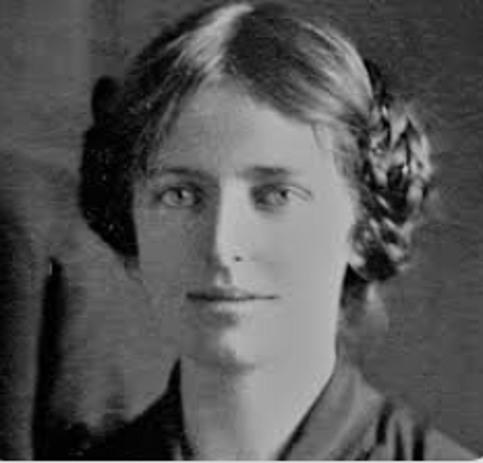
Muriel McSwiney
My research for the Battle of the Somme and the Irish War of Independence made me focus on the decade between 1914-24. A recurring theme began emerging as I uncovered the largely forgotten roles played by women (on both sides). In a momentous decade that saw suffrage and the first female MPs, some women made huge contributions that history has often forgotten.
An outstanding example is Muriel McSwiney
Muriel was the widow of Terence McSwiney, the Lord Mayor of Cork who died on hunger strike in Brixton Prison in 1920. He had used the hunger strike as a weapon to protest against the heinous practice of internment, where the State could imprison "suspects" indefinitely, without trial or evidence. As his death drew near, he received messages from Gandhi, Nehru, Ho Chi Minh and even Mussolini in a global outpouring of support. It was to no avail as the British remained unmoved. One of his final comments was "The British Empire will be more damaged by my death than my release."
I wonder if he realised just how much damage his grieving wife would inflict?
Intelligent, articulate and the widow of an Irish martyr, Muriel McSwiney embarked on a speaking tour of the US. She raised millions of dollars for the Irish Republic and inflicted a PR disaster on the British government, now keen on encouraging US hegemony post-WWI. She was a factor in forcing Lloyd George to offer the Truce in July 1921.
Originally invited to speak to a US Commission of Inquiry into alleged British atrocities in Ireland, her powers of oratory were instantly recognised and she expanded into a multi-city speaking tour encompassing Chicago, Boston, San Francisco and Philadelphia. Everywhere she went, she was flanked by Senators and Congressmen as the weight of the Irish-American political lobby fell in behind her. Over 15,000 people packed into Madison Square Garden in New York to listen to her impassioned plea:
"I stand before you as the widow of Terence McSwiney, Lord Mayor of Cork who gave his life for Ireland. He starved himself to death in an English prison because he would not recognise the right of England to rule Ireland. His death and the deaths of the other martyrs will not be in vain. Ireland will be free!"
Her emotional, eloquent and rousing delivery invariably ended with a call to action:
"We ask not only for your sympathy but for your active help… for the recognition of our Republic and for funds to carry on the fight."
Her contribution to the Irish Republican cause was unparalleled. Fittingly, she became the first ever woman to be awarded the Freedom of New York City, positioning her in a rarefied elite with the likes of George Washington.
Yet she has been largely airbrushed out of the narrative. A typical example of the airbrushing is Ann Dolan's entry for Muriel McSwiney in the Dictionary of Irish Biography. In a slovenly piece of work, Dolan accuses Muriel of causing the breakup of the family. "The fissures widened when she was the only family member to recognise and attend Terence's inquest." Utter rubbish! The publicly available Metropolitan Police files and contemporary newspaper reports confirm that Muriel attended the inquest, accompanied by Terence's two brothers (Peter and Sean) and his two sisters (Annie and Mary). In fact, her attendance was a triumph: in a series of feisty exchanges with the Coroner who initially would not accept "Volunteer Officer" as a legitimate occupation, she succeeded in preventing the verdict being recorded as suicide.
The reason Muriel has not been afforded the respect she earned? She rejected the omnipotent Catholic Church in Ireland, which threatened to excommunicate her husband for the mortal sin of suicide (with a consequent denial of Church rites). Ever the fighter, she renounced Catholicism and became an atheist. At a time when the Church held an unassailable grip on Irish society, her courage caused her isolation.
Muriel McSwiney — you have been done a disservice.
In those uncertain, fledgling days of 1920-21, your success in raising awareness and millions of dollars for the Republican Loan was unparalleled. No woman, and I include Countess Markiewicz, made a greater contribution to Ireland's independence. Historians who bother to do the research will see that.